

System Integration for a Stable Business Environment


The Challenge
AB Bechcicki is a nationwide distributor of construction materials with over 25 years of experience and one of the leaders in the Polish paints and coatings market. The company operates in two main areas: construction materials distribution and investment project support, supplying contractors, investors, retail stores, and industrial customers.
AB Bechcicki works with more than 300 manufacturers from Poland and abroad and runs its operations through a nationwide network of wholesale branches as well as e-commerce channels serving individual customers. While B2C online sales had been in place for several years, the B2B model relied mainly on physical branches and sales representatives. As the business scaled, this approach exposed clear limitations caused by the lack of consistent integration between sales channels and systems.
The company approached Univio with the goal of launching B2B online sales. During the implementation of the B2B platform, the scope was expanded and AB Bechcicki decided to initiate a broader digital transformation, with system and data integration at its core. The goal was to enable an omnichannel sales model and streamline information flows between channels and internal teams.
By adopting an integration-first approach, AB Bechcicki focused its transformation on data unification, automation of data flows between systems and channels (and later also processes), and delivering a consistent purchasing experience across the entire organization.
- Fragmented data instead of a single source of truth, meaning product availability and pricing were not directly accessible to customers and required contact with a sales representative.
- Manual data entry and spreadsheet-based management, as well as manual handling of orders, price lists, and product data, increased operational costs, extended processing times, and raised the risk of errors.
- Product availability, delivery times, and order statuses were communicated mainly via email and phone rather than being available to customers 24/7, generating a high volume of inquiries and consuming a significant portion of sales representatives’ time.
- Frequent data exports and imports between systems, often preceded by manual processing, burdened operational teams, slowed down processes, and increased the risk of mistakes.
- Limited scalability and flexibility: launching a new sales channel, marketplace, or pricing change required parallel work across multiple systems and teams, increasing time-to-market and error risk.
- Limited cross-system analytics: reporting relied mainly on ERP data, while information from other systems was either unavailable or required manual enrichment, making end-to-end margin, assortment, and customer analysis difficult.

The Solution
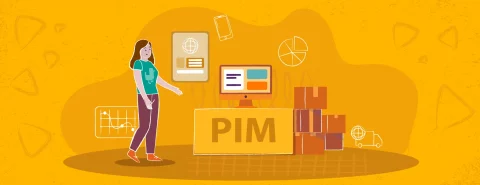
- Implementation of Unilinker, a proprietary integration platform acting as a central integration layer connecting SAP B1 ERP, ePrice pricing management, Ergonode PIM, ONe B2B e-commerce, and IdoSell B2C e-commerce, enabling near real-time, event-driven integration.
- Synchronization of product data (category trees, products, attributes, images, units of measure, variants) from PIM to all e-commerce platforms and ERP.
- End-to-end order orchestration covering inventory reservations, order splitting by branches/warehouses, document flows, order statuses and notifications, shipment tracking numbers, and delivery cost calculations based on dimensions.
- Automation of post-sales processes, including synchronization of invoices, credit notes, delivery documents, payments, credit limits, sales blocks, and customer data.
- Enablement of centralized monitoring, analytics, and scalable data processing across multiple systems.

The Result

The Technologies
/ Behind Solutions


Digital Transformation of a Building Materials Distributor
Driven by a powerful digital transformation, the company successfully launched sales through an omnichannel model.
We can help
you as well
Discover how we can build a strong integration foundation for your business and create an architecture that supports long-term growth.
